01 / DECLARE
Declarations are the source.
Models, pages and processes are expressed as versioned contracts. The visual designer edits that same truth — not a hidden second format.
version · diff · review · promoteBuild fast. Change safely.
AuraBoot is an AI-native enterprise application runtime for complex business. Models, pages and processes are declaration-driven; every business write — from people, automation, or AI — passes through one permission, validation and audit path.
AuraBot is ready to run crm:create_lead Customer, owner and next step identified; submitting still enters the same command boundary.
AuraBoot collapses complexity into three stable principles: declarations define the system, commands constrain change, plugins carry delivery. When AI enters, it gets no special channel.
Models, pages and processes are expressed as versioned contracts. The visual designer edits that same truth — not a hidden second format.
version · diff · review · promoteBusiness writes are expressed as commands, then pass authorization, validation, state guard, execution, audit and events in order. Governance is not scattered across every button and endpoint.
one write contractIndustry capability contributes models, commands, pages, permissions and processes as plugins. Customization need not live as long-term patches on the trunk.
capability as a packageWhat it can call is decided by the command contract; what it did still passes permission and audit.
Start with a local environment, DSL and plugins; when business teams join, the designer, permissions, processes and audit still land in the same runtime model.
Source, declarations, API, CLI and plugins are all at hand. Verify the runtime first, then decide how the team adopts.
Business users change pages and processes in the designer; engineers still review contracts, set boundaries and trace every change.
We don't just sell the platform — we build complex products on it. These are real, golden-tested systems running on the same stack you'd self-host.
No anonymous logos. Each entry shows a real interface and states its status, scope and the AuraBoot capabilities it uses.
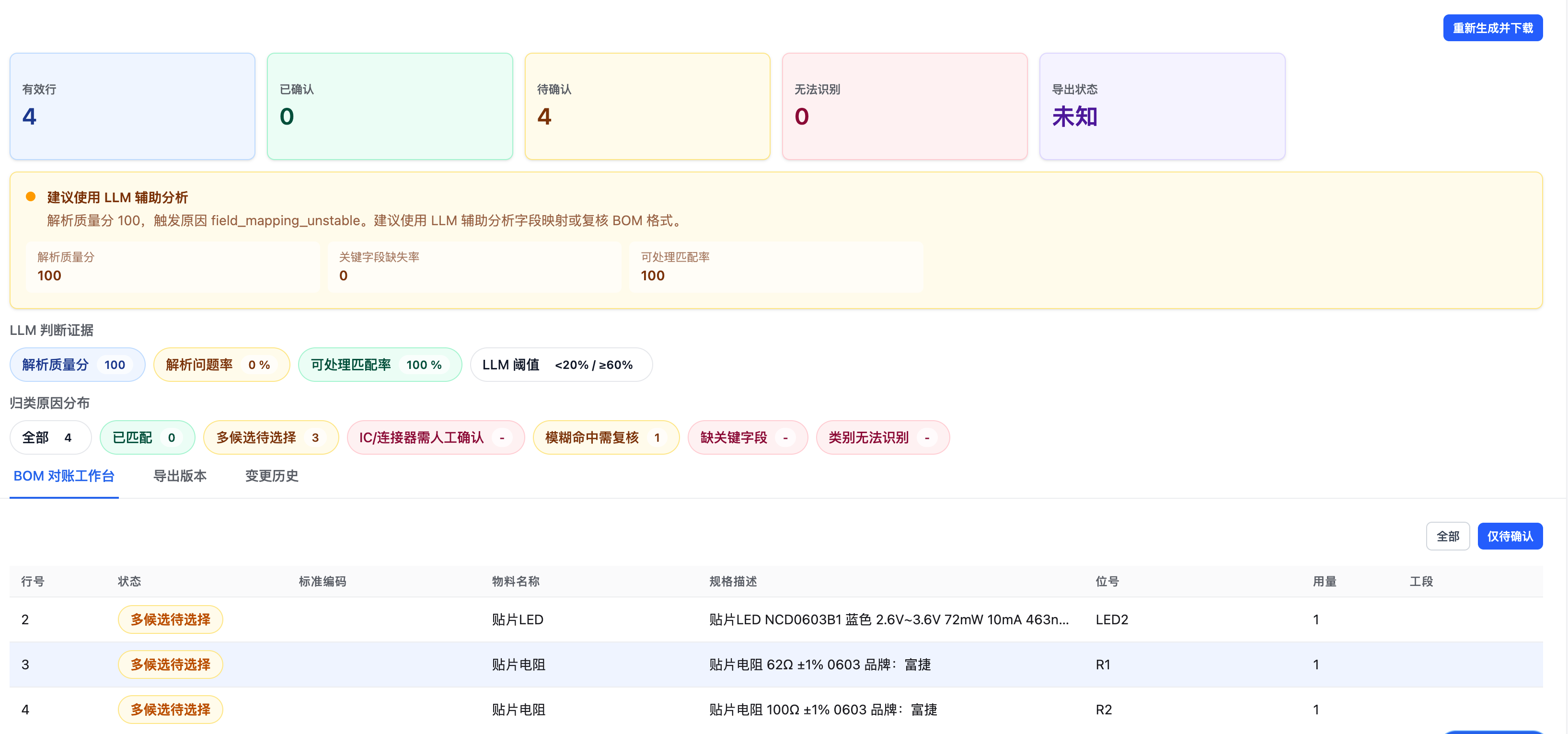
A PCBA quoting flow that standardizes messy customer BOMs, reviews material candidates, counts process work, and exports quote-ready Excel from one governed command pipeline. In production at an electronics manufacturer (PCBA).
Read the case →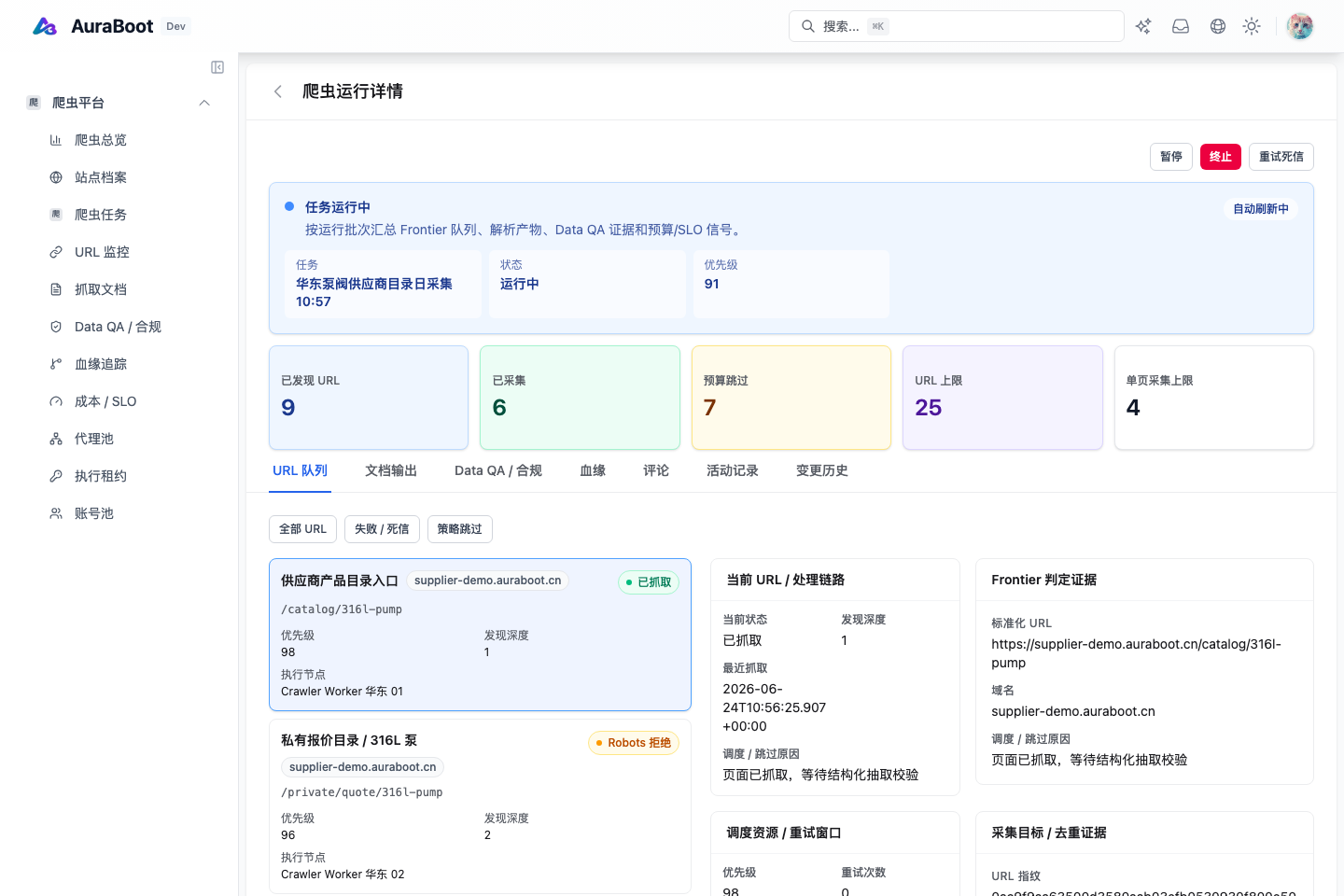
A governed crawl operations product that turns jobs, frontier URLs, extracted documents, artifacts, lineage, quality checks, session / lease state, and usage cost / SLO signals into one auditable platform workflow.
Read the case →We state the boundary up front: it serves long-lived, operationally complex systems that need governance and are ready to let AI execute business actions.
Quoting, orders, procurement, fulfillment and traceability cross several domains.
Record-level, org-level, attribute-level or field-level governance and traceability.
Agents must safely call business operations under the same rules.
Deliver as plugins instead of maintaining a pile of customer patches.
When commands, audit and layered permissions are unused, a lightweight builder is more direct.
Country compliance and packaged-suite depth are not something a runtime replaces on day one.
For a throwaway internal tool, learning the governance contract may not be worth it.
UI, automation, external integrations and AI share one command boundary; models, pages, permissions, processes and plugins are the platform first-class citizens.
Spin up the community edition with Docker Compose and see for yourself whether declarations, pages, commands and audit fit your system.